Programme news
Reflecting on 2025: A Year of Partnership, Progress and Promise
 Paul Spooner, ESR Director
As I look back on 2025, I continue to be immensely proud of what we have achieved together across the NHS. Delivering meaningful change in an environment of competing pressures and sustained operational challenge is never easy. However, NHS colleagues across England and Wales have once again demonstrated remarkable commitment, professionalism, and resilience to deliver effective workforce services and change.
A personal stand out is how teams, both national and local, have continued to work together to progress the important journey of supporting our NHS people and the care they provide – with some great innovation deployed as referenced within this edition of ESR News.
Your partnership with the NHSBSA ESR team is central to our continued success – thank you!
We have continued to work closely with DHSC, NHS England and NHS Wales in order to strengthen the ESR service, expand its usage and enhance its functionality. Such ongoing collaboration remains critical to the success of the ESR service.
I would also like to extend my thanks to our technology and service partner IBM, and to colleagues across the NHSBSA ESR team, for their commitment to delivering a stable, secure and high-quality service during another busy and challenging year for ESR.
Strengthening ESR to meet developing service user needs
Supporting workforce policy in England and Wales has remained a core focus this year, including the successful and timely delivery of national pay awards.
We have continued to enhance ESR to meet the growing needs of the workforce. Key developments this year included:
- Enhancements to the Leavers Dashboard, providing digital access to pay information and improving the experience for staff moving on from the NHS.
- A new Socio-economic Background portlet, rapidly increasing data collection and helping organisations better understand and tackle barriers to opportunity.
- Updates to Total Reward Statements, aligned with the McCloud remedy, giving eligible pension scheme members clearer information about their options.
These developments reflect our ongoing commitment to deliver a modern, responsive ESR service for the NHS.
The Future NHS Workforce Solution – A Landmark Step Forward
One of the most significant milestones for ESR Services, and for the wider NHS, arrived in October with the completion of the procurement for a Future NHS Workforce Solution. A contract has been awarded to Infosys, who will both run the existing ESR service from September 2026 and deliver the future solution.
Work is now underway, with teams mobilising to initiate design activities, plan transition arrangements and build the foundation of a modern, integrated, future-ready workforce platform.
Early engagement remains critical. We have recently invited a number of NHS organisations to be early adopters of the new solution and in January 2026, the Readiness and Implementation team will be engaging with those organisations to secure commitment to an early adopter phase. Their insight will help validate the design and implementation approach and ensure the solution will reflect the needs of NHS organisations and their workforce.
Chris Price, Programme Director - Future NHS Workforce Solution Transformation Programme, comments:
This has been a monumental year for the programme with many significant achievements over the last 12 months. This includes the huge milestone in October of receiving Full Business Case approvals and announcing Infosys as the supplier for the Future NHS Workforce Solution.
The future solution is a core enabler of the NHS 10 Year Plan, NHS Long Term Workforce Plan, and people service transformation, transforming how the NHS trains, recruits, retains, and reforms its workforce.
As we head into 2026, we are continuing to work in partnership with the Infosys consortium with key focus on the design activities for the future solution, developing our implementation approach, as well preparatory activities for the running of the existing ESR Service from September 2026.
Our heartfelt thanks go out to all our NHS colleagues in England and Wales who have helped us reach this point – this really has been a team effort.
Thank You - and Looking Ahead
I hope you find this edition of ESR News both informative and inspiring. The articles featured highlight how organisations continue to innovate with ESR, supporting local priorities while advancing national workforce goals.
On behalf of the NHSBSA and the ESR Service team, thank you for your ongoing support, engagement, and partnership. As we enter another pivotal year – including a continued focus on ESR services and preparing for the Future NHS Workforce Solution, we look forward to continuing this exciting journey with you.
May I offer best wishes for the Christmas period and a healthy, happy and successful 2026.
Strengthening Support for the Future NHS Workforce Solution: Introducing the evolved Readiness & Implementation Team
To strengthen our strategic engagement and elevate the positioning of both ESR and the Future NHS Workforce Solution Transformation Programme, we have introduced new Senior Implementation Leads. These roles will help deepen relationships with senior stakeholders, support organisational readiness, and ensure that ESR and the future solution are understood as critical enablers of workforce transformation.
As part of the evolution of our national NHS ESR regional teams, during 2025 the teams have entered a new phase of development, forming the Readiness & Implementation (R&I) Team. This strengthened and strategically focused function has been designed to offer enhanced support to NHS organisations across England and Wales through a period of significant transformation.
This transition reflects the growing scale and complexity of the Future NHS Workforce Solution Transformation Programme and the evolving needs of User Organisations operating within an environment of increasing demand, diverse operating models, and rapidly changing shared service arrangements.
To meet this challenge, the team has expanded with the creation of two new specialist teams:
- A Shared Services Team, with a national remit to build and strengthen relationships with shared service providers and support the development of readiness and implementation strategies in this complex and evolving landscape.
- A dedicated NHS Wales Team, ensuring tailored, high-quality support for organisations across Wales in recognition of their specific structures, requirements, and pathways.
Together with our new Senior Implementation Leads, these additions significantly enhance our ability to coordinate, guide and empower User Organisations as they prepare for the transition to the future solution.
Empowering Organisations for the Future NHS Workforce Solution
The Readiness & Implementation Team plays a pivotal role in ensuring NHS organisations are informed, confident and well-prepared for the future solution.
We work alongside User Organisations to ensure they have:
- the right support
- the right tools
- and the right assurance
to deliver their responsibilities at every stage of readiness and implementation.
By working collaboratively with Infosys, the team will help organisations fully understand and maximise the capabilities of the new solution, driving adoption (including local transformation), improving user experience and ensuring long-term benefits for both staff and services.
Importantly, this work continues alongside our support for the existing ESR solution. The team continues to provide functional SME expertise, targeted guidance and educational materials to help organisations optimise ESR today while preparing for the transition to the Future NHS Workforce Solution.
Strengthening Engagement and Collaboration Across the NHS
The Readiness & Implementation team plays a key role in building connections and ensuring collaboration across the wider NHS community. We bring organisations, partners, and stakeholders together through governance and engagement forums that promote shared learning, transparency, and alignment with the goals of both the ESR Service and the Future NHS Workforce Solution Transformation Programme.
We also work closely with Infosys and its partners to raise awareness of the future solution’s vision, ensuring clear and consistent communication across the system and fostering collaborative relationships that support successful implementation.
The team additionally helps the programme manage external dependencies—ensuring they are understood, planned for and embedded into readiness and implementation activity. This joined-up approach supports both local and national success.
Your Readiness & Implementation Team: here to support you
Every NHS organisation has access to a dedicated NHSBSA Readiness & Implementation team, providing hands-on support tailored to local needs.
Whether you are looking to:
- optimise your current use of ESR,
- understand your responsibilities for the future solution, or
- prepare your organisation for the transition and transformation ahead,
your Readiness & Implementation team are here to help.
You can find contact information about your NHSBSA Readiness & Implementation team here, making it easy to connect with the team who can best support your organisation’s readiness and implementation journey.
Enhancing the ESR Experience
This year we have continued our focus on improving usability for NHS employees, managers and professional users, while continuing to collaborate with strategic partners to support national workforce priorities. Highlights include:
January: Improved Support for Leavers
The Leavers Dashboard was enhanced with a new P11D portlet, enabling leavers to access all pay-related data electronically. This upgrade improves the user experience and supports the NHS ambition to reduce reliance on paper.
June: Accelerating Socio-economic Background (SEB) Data Collection
We launched a new SEB portlet to make the declaration process more visible and efficient. Before launch, only 900 employees recorded their data over three months; since implementation, more than 18,500 declarations have been made in just five months. Faster and more comprehensive data will help organisations identify and remove barriers to opportunity, improving the experience for current and future NHS staff.
September: Strengthening Data Quality and Security
We amended the Applicant Purge process to increase its effectiveness. The change enables organisations to remove outdated records that can cause duplication and reporting errors, while also strengthening security by closing inactive accounts. Since the change, 170,000 additional applicant records have been purged.
Pay Awards and Pension Updates Delivered on Time
Throughout the year, multiple pay awards were delivered successfully across the NHS. Updates were also made to Total Reward Statements in line with the McCloud remedy, helping eligible pension scheme members to make informed retirement choices.
Improving Workforce Intelligence
We delivered a wide range of enhancements across the ESR Business Intelligence dashboards to reflect user needs, improve data quality and enable more informed workforce decision-making.
Behind the Scenes: Technical Improvements
Not all improvements are immediately visible to users, but technical changes are critical to ensure ESR remains reliable, secure and ready for future development.
Streamlining ESR Content Management
In June we introduced a streamlined approach to updating content on the ESR Hub and Portal by removing the Liferay content staging servers. This has simplified the system architecture, reduced complexity and improved deployment efficiency for content updates.
These enhancements demonstrate our continued commitment to supporting the NHS workforce through a modern, secure and responsive national ESR service. We look forward to building on this progress in 2026.
ESR & Job Planning Software Interface
Background
Research undertaken by NHS England (NHSE) has identified significant misalignment -typically 5-15% - between consultant and SAS doctor job plans and the pay they receive. For a single NHS organisation, this represents an estimated £100k of over- or under-payments. Trusts also report persistent challenges reconciling job planning outputs with ESR employee records, including applying the correct inclusion and exclusion criteria.
Following consultation with a supplier reference group and the national provider job planning forum, NHSE engaged with NHSBSA ESR team and asked for a solution that would address these two main factors:
- ESR job planning forms required updates to reflect previously agreed data changes.
- There was no mechanism to transfer job plan data from external job planning systems into ESR.
Purpose of the Interface
Many NHS organisations use third-party software to record job plans. Currently, this information must be re-entered into ESR manually - an approach that increases workload, can introduce errors and limits visibility of system-wide clinical capacity.
To address this, NHSE, NHSBSA ESR and third-party suppliers have co-designed a new Application Programming Interface (API) that automatically transfers job planning data from external systems into ESR.
The interface:
- Eliminates manual transcription
- Improves data completeness and accuracy
- Populates the updated ESR job planning form
- Enables reporting in ESR BI
While the API does not automate the pay process, it will flag discrepancies between job plan data and pay information, allowing timely correction.
An image of the updated form and data fields is included below.
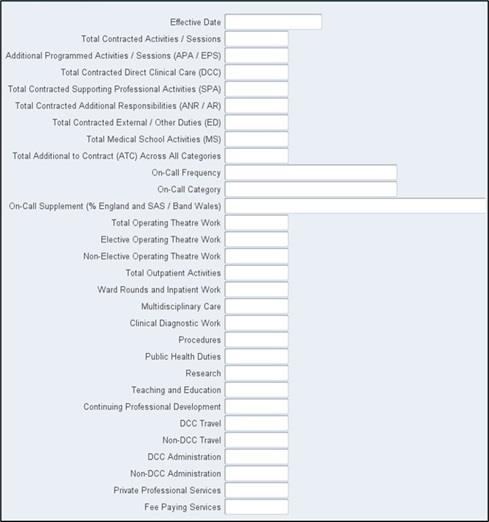 Job Plans - form and updated data fields
What Problems Does the Interface Solve?
Engagement with NHS Trusts highlighted widespread demand for automated data transfer. The absence of integration has led to:
- Increased administrative burden
- Localised job planning data
- Avoidable pay errors
- Limited visibility of clinical capacity across systems
Different suppliers use varied data structures and job planning terminology. The API provides a standardised data format, enabling:
- System-level demand and capacity planning
- More effective deployment of clinical workforce
- Benchmarking across organisations and services
- Consistent, reliable reporting
This supports a more strategic approach to workforce deployment and strengthens the alignment between job planning, activity and capacity.
Anticipated Benefits
- Reduction in pay errors caused by misaligned or incomplete job plan data
- Lower administrative workload associated with reconciliation processes
- Improved visibility of workforce capacity across ICS boundaries
- Enhanced benchmarking through the Model Health System
- Automated national reporting, driving improvements in data quality
Availability
The API became available for implementation in September 2025. A phased roll out is supporting organisations to adopt the interface, with:
- NHSE support where required
- Supplier engagement
- A trust feedback forum to share learning and inform future updates
Resource Requirements
NHS England is funding the pilot phase until 31 March 2026. No ongoing commitment is required during this phase.
Longer-term, organisations should anticipate an annual maintenance fee, in line with other integration services that incur a charge.
Implementation is likely to highlight both over- and under-payments and may prompt a review of local job planning processes and budgetary controls. Many organisations may wish to combine interface adoption with a quality review of job plans and strengthened payroll reconciliation processes.
How to Apply
Once your organisation has secured the necessary internal approval (potentially, Medical Director, HR, Finance) and agreed with your chosen job planning system supplier, please raise an ESR Service Request to begin implementation.
Further information is available on the ESR Hub, including:
These resources provide a detailed overview of the interface, data fields and implementation workflow.
ESR Portal Helping NHS Employees To Steer Clear Of Tax Avoidance
Since October 2023, the ESR service team has been working with HMRC to raise awareness and educate NHS employees about tax avoidance.
You may have noticed that the ESR portal dashboard has hosted a portal announcement for HMRC, targeted at temporary workers, bank staff, contractors, agency workers and anyone working through an umbrella company. The announcement generated a significant boost in the number of views to HMRC’s campaign page - a staggering 82,000.
 HMRC Tax Avoidance Umbrella company portal message
Employees clicking the portal announcement were taken through to the HMRC campaign page where they found information to help them steer clear of tax avoidance schemes. The campaign had helpful information from guidance, online tools, and even some personal stories of people who have unfortunately been caught out. HMRC advises the following:
What is tax avoidance?
Tax avoidance are arrangements where people pay less tax than they should. While some arrangements are presented as compliant, many are later found not to achieve the tax outcomes promised.
Individuals who enter into tax avoidance schemes may ultimately be required to pay the tax that HM Revenue & Customs (HMRC) determines is due, along with interest and, in some cases, penalties. This can be in addition to any fees paid to participate in the scheme.
How do tax avoidance schemes work?
Tax avoidance schemes often involve third parties, such as umbrella companies, structuring a worker’s pay in unconventional ways. This may include receiving part of their income as a loan, salary advance, grant, annuity, or similar payment that is described as non-repayable and presented as non-taxable. These arrangements are typically promoted on the basis that they increase take-home pay, sometimes with limited explanation of how this is achieved.
In many cases, such schemes have been challenged by HMRC and found not to deliver the intended tax treatment when tested in the courts and tribunals.
|
The impact of tax avoidance is real and could be serious, so it’s important not to ignore the problem. People are often taken in by the financial benefits on offer, including Tanya, a nurse who was encouraged to get into a tax avoidance scheme, which left her with a large and unexpected tax bill. Tanya and Duncan have shared their stories which you can access on the HMRC campaign page.
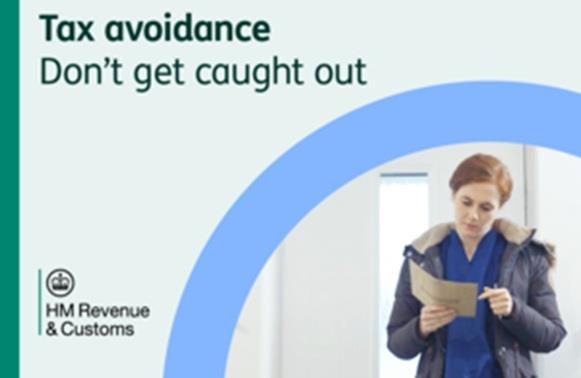 HMRC Tax Avoidance don\'t get caught out portal message
HMRC are clear that if an umbrella company makes you an offer that sounds too good to be true, you should take time to consider it carefully and ask for full details.
HMRC wants to stop people being drawn into such schemes as well as help them leave tax avoidance schemes if they believe they might be caught up in one. One of the best ways to do this is to educate employees about the risks of tax avoidance schemes operated by non-compliant umbrella companies and the warning signs that HMRC advises to watch out for include:
-
-
if you get a separate payment which you are told is not taxable;
-
if you get more money paid into you bank account than is shown on your payslip;
-
if you get a payment from someone other than your umbrella company, which has not been taxed;
-
if you get asked to sign another agreement in addition to your employment contract.
|
If you become aware of a tax avoidance scheme or an agency or umbrella company that is not following the tax rules, you should take action to report this to HMRC.
How can you help?
NHS managers, colleagues and stakeholders can help direct staff to the campaign at any time, and HMRC is encouraging organisations to share this important information. This will help staff understand their pay arrangements, so they can learn how to identify, leave and report a tax avoidance scheme.
There is also a helpful HMRC list of named tax avoidance scheme promoters. The list is not exhaustive so if an umbrella company is not shown, this does not mean that they are not operating a tax avoidance scheme, or the scheme is in any way approved by HMRC. HMRC does not approve tax avoidance schemes for use. A short You tube video called ‘Umbrella companies: what are the risks to contractors?’ highlights the risks to contractors using umbrella companies and the possible warning signs that indicate they may be operating a tax avoidance scheme.